
How many times have you swallowed your words to keep the peace? How often have you felt a physical lump in your throat when you wanted to speak your truth, but chose silence instead?
For many women, the suppression of our authentic voice isn’t just a mental habit; it is a physical burden carried deep within the body. Over time, the things we do not say—the boundaries we don’t set, the tears we don’t shed, the joys we don’t celebrate loudly—become trapped tension. We learn to soften our edges, lower our volume, and contour our expressions to fit the expectations of the world around us.
But what happens when you finally decide that you are done being quiet?
The journey back to your truest self rarely starts in the mind alone; it requires returning to the body. This is where a voice embodiment practice becomes a powerful catalyst for transformation. By learning to release stored tension through sound, movement, and breath, we can unravel years of conditioning.
Ready to find your voice in the forest? Join us at Camp Cedar Ridge this May for the Wild & Rooted retreat—a 3-day immersive somatic healing retreat designed exclusively for women to explore authentic expression in a trauma-informed sisterhood circle. Secure your spot today: Register for Wild & Rooted.
The Weight of the Unspoken Word: Understanding Somatic Storage
To understand the power of vocal healing, we must first understand how the body stores stress. “Somatics” refers to experiencing the body from within. When we experience stress, trauma, or chronic silencing, our nervous system reacts. If we cannot fully process those experiences at the moment, the body literally holds onto the energy.
This tension often settles in the jaw, the throat, the chest, and the diaphragm—the very centers of respiration and vocalization.
When you feel that tightness in your chest or the inability to take a deep, grounding breath, your body is communicating a physical truth. Talk therapy is an incredible tool for understanding why we feel the way we do, but intellectualizing our feelings doesn’t always move the physical energy out of our tissues.
| Approach | Primary Focus | Method of Processing | Goal |
| Cognitive/Talk Therapy | The Mind | Analyzing, discussing, reframing thoughts. | Mental clarity and behavioral adjustment. |
| Somatic Healing | The Body | Feeling, sensing, moving, sounding. | Nervous system regulation and physical release. |
To truly release the physical imprint of being silenced, we must engage the body physically. This is why attending a dedicated somatic healing retreat is often the breakthrough many women need when traditional cognitive approaches have taken them as far as they can go.
What is a Voice Embodiment Practice?
A voice embodiment practice is not about learning how to sing beautifully, hitting the right notes, or performing for an audience. It is about utilizing sound as a physical bridge between your inner emotional landscape and the outer world.
Physiologically, vocalizing has a profound impact on the human nervous system. The vocal cords are directly connected to the vagus nerve, which is the primary superhighway of the parasympathetic nervous system (the “rest and digest” state). When we engage the vocal cords through specific practices—like sighing, humming, or vocal toning—we send immediate signals of safety to the brain.
The Benefits of Vocal Embodiment
Engaging in these practices regularly—and especially in the container of a women’s retreat—provides deeply grounded benefits:
- Nervous System Regulation: Low-frequency sounds and humming stimulate the vagus nerve, lowering heart rate and reducing cortisol levels.
- Emotional Release: Sound bypasses the logical brain. A primal groan or a soaring sigh can release grief or anger much faster than trying to explain it in words.
- Increased Confidence: Taking up space with your sound translates directly to feeling worthy of taking up space in your daily life, career, and relationships.
- Physical Relaxation: Activating the diaphragm and throat releases chronic tension in the neck, jaw, and shoulders.
Key Modalities of Somatic Voice Work
If you attend a somatic healing retreat, you will likely experience a tapestry of different modalities designed to gently coax your authentic voice out of hiding. Rather than being pushed into uncomfortable performance, trauma-informed spaces allow expression to arise naturally.
Here are a few core practices used to cultivate voice embodiment:
1. Vocal Toning and Vocal Yoga
Vocal toning is the practice of creating sustained vowel sounds (like “Ah,” “Ee,” or “Oh”) for an extended period. Because there are no lyrics or melodies to remember, the mind can completely relax. The focus is entirely on the vibration of the sound as it resonates through different cavities of the body—the chest, the throat, the nasal passages, and the skull. Vocal yoga pairs these sustained sounds with gentle, intentional stretches to open up the physical pathways of expression.
2. Intuitive Movement
Our voices are carried by our bodies. If the body is rigid, the voice will be restricted. Intuitive movement encourages you to step away from choreographed exercises and simply let the body move exactly how it wants to. Whether it is swaying, shaking out the limbs, or gently rolling the spine, moving the body helps dislodge stagnant energy, making way for a clearer, more resonant sound.
3. Collective Sounding and Drumming
There is an ancestral resonance in collective sound. For thousands of years, women have gathered to sing, wail, chant, and weave rhythms together. Modern life has largely erased these communal spaces. Re-engaging with group drumming and collective sounding reminds the nervous system that it is safe to be heard within a community. When your voice joins a chorus of other women, the fear of judgment melts into a profound sense of belonging.
4. Sound Immersion (Sound Baths)
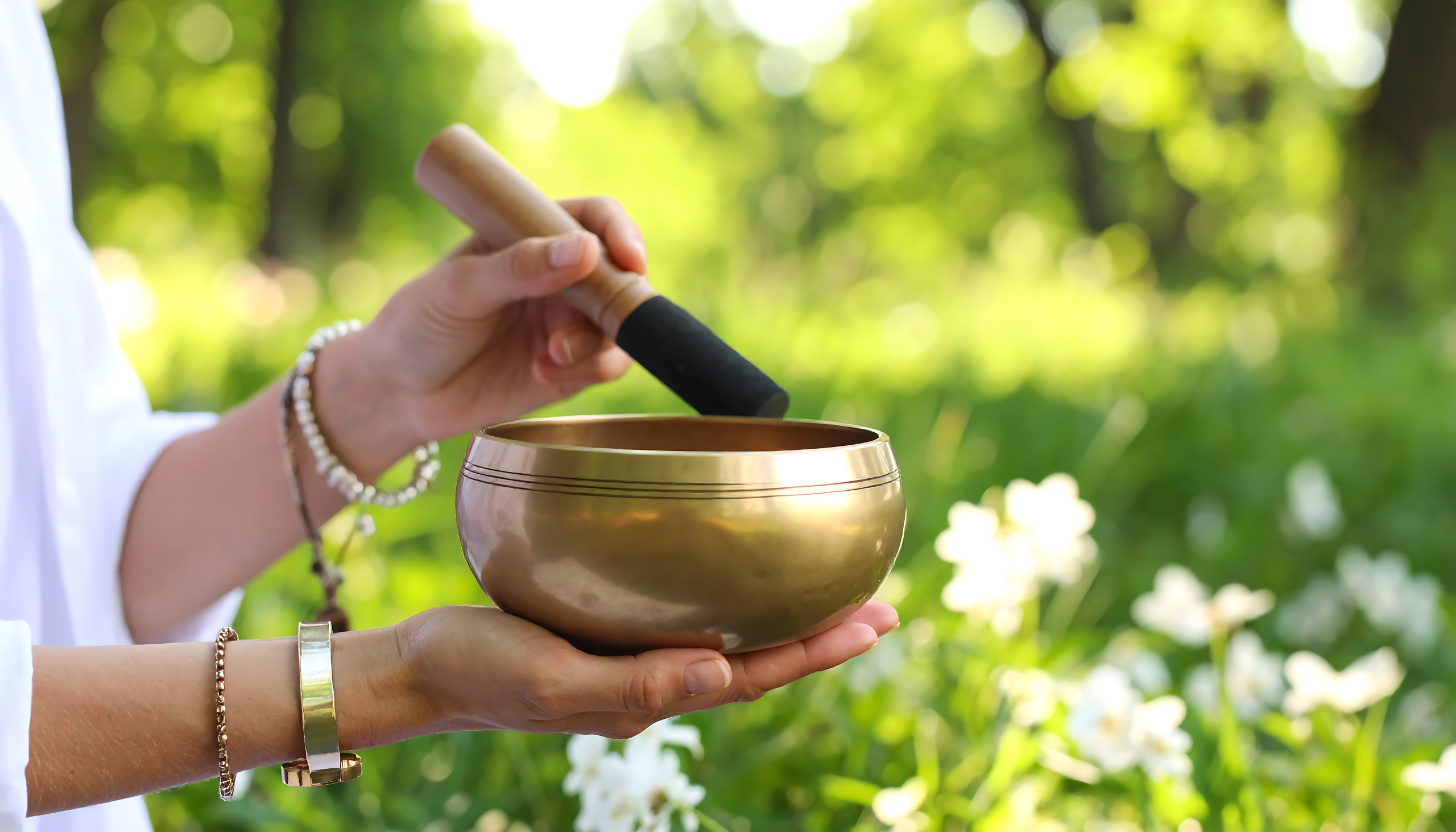
A crucial part of expression is also the ability to receive. Restorative sound baths—using instruments like singing bowls, chimes, and handpans—bathe the body in therapeutic frequencies. This passive somatic practice allows the brain waves to drop into a deeply restorative state, integrating the active work done earlier in the day.
The Role of Nature in Somatic Grounding
You can practice vocal toning in your living room, but there is a distinct reason why deep somatic work is best done in nature.
When we are surrounded by concrete, digital screens, and the relentless hum of city life, our nervous systems are chronically overstimulated. To open up and be vulnerable with our voices, we need an environment that inherently supports grounding.
Immersing yourself in nature—surrounded by towering forests, open vistas, and flowing rivers—reminds the body of its natural rhythms. The natural world does not judge. The river does not critique the sound of your voice; the forest does not ask you to lower your volume. Walking barefoot on uneven terrain, breathing in the scent of pine, and gathering under the night sky are all profound somatic practices in their own right. Nature acts as the ultimate co-facilitator, holding space for your most feral, authentic, and unfiltered expressions.
Your Invitation: The Wild & Rooted Retreat
If you are feeling the call to step out of silence and back into your power, we invite you to join us at Camp Cedar Ridge in Vernonia, Oregon, for the Wild & Rooted Retreat.
Running from Friday, May 15, 2026, to Sunday, May 17, 2026, this 2-night, 3-day somatic healing retreat is an immersive weekend dedicated entirely to voice, sisterhood, and authentic expression.
Nestled in a 32-acre property covered by trees in the gorgeous coastal range of northern Oregon, this retreat honors duality: the longing to be seen, and the need to feel safe enough to open.
Meet Your Facilitator
The weekend is guided by Mokshajyoti (Chumki Chakraborty), a sacred sound artist, sound weaver, trauma-informed self-expression guide, and founder of Moss & Moksha. Her work beautifully centers the voice as a bridge between the inner and outer worlds. Mokshajyoti is dedicated to creating spaces where participants can explore their expression without the pressure of performance, ensuring a tender, trauma-informed environment for all women.
What to Expect
Throughout our weekend together, you will experience a carefully woven itinerary of:
- Voice Embodiment Practice: Gentle somatic exercises to release jaw and throat tension.
- Sound Exploration: Vocal toning, chanting, and collective sounding in the forest.
- Deep Rest: Restorative sound bath immersions and handpan integrations under the night sky.
- Ritual & Connection: A candlelit forest labyrinth walk and guided journaling in a supportive circle.
- Nature Immersion: Spacious time for river walks, quiet reflection, and grounding in the beautiful Pacific Northwest landscape.
This space welcomes all women (AMAB/trans, binary, cis) who are ready to experience their voice not as a tool for performance, but as a living pathway between the body, heart, and community.
With all vegan and vegetarian meals included, you can choose the lodging option that best fits your needs, from our highly sought-after private rooms to bringing your own tent to sleep under the stars.
Reclaim Your Voice Today
You do not have to carry the weight of the unspoken word forever. You deserve a space where your expression is not only welcomed but celebrated. Give yourself the gift of a weekend in the woods to reconnect with the instinctual sound rising from within you.
Spaces for this intimate sisterhood gathering are limited. (Please note that our $500 Private Room options have extremely limited availability).
Click Here to Secure Your Spot at the Wild & Rooted Retreat and take the first step toward reclaiming your authentic voice.